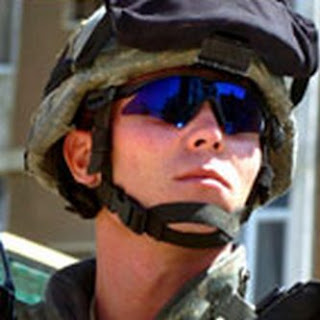
The job specialty of Marine Corps Precision Weapons Repair is a trained and skilled job. Not everyone that desires to get into this field is able to; a person has to qualify for this highly competitive field. The Marine
Corps Precision Weapons Repair person deals with the inspection, maintenance, fabrication, repair and function of small arms, rifles and precision weapons systems. The Weapons Repairer is someone that works in support of a variety of different Marine Corps small arms programs, such as Depot Maintenance, Competition in Arms, and other Corps training and Intra support service programs. The Trained Marine Corps Support Weapons repair specialist is an expert in small arms and weapons systems repair.
To serve as a Marine Corps Weapons repairperson, there are some various requirements. A specific ASVAB score of 105 on the MM section is required to enter the Precision Weapons Repair program. A candidate will be at least a Corporal and have at least three years left on their obligated enlistment, the training that the Marine Corps invests in their Precision Weapons Repair Personnel is valuable and they do not want to deal with short timers in training new personnel. Other requirements for the Precision Weapons Repair Program include; being able to use equipment, machinist tools and power equipment, and a working knowledge of the Competition in Arms Program. You will attend basic training and learn how to become a
Marine Corps enlisted member. The Marine Corps Weapons Repairer training is both in the classroom and on the job. After basic training, a candidate for Precision Weapons repairer will attend an advanced training school where different basic ordnance and weapons repair concepts are taught. Hands back up classroom training on use of tools and work on specific weapons and weapons systems. The candidate will learn how to service, repair and inspect basic small arms and ordnance, and learn how to solve basic repair problems.
2012年9月13日星期四
United States Air Force
Do you have what it takes to belong to one of most powerful military
branches in the world? Are you dedicated? Confident? Determined? Loyal?
If you answered yes, then a career in the United States Air Force is
waiting for you!
Today, the Air Force is made up of active duty forces, Air Force Reserve and Air National Guard units under the command of the United States Air Force Headquarters at the Pentagon in Arlington, Virginia.
The United States Air Force has seen conflict and battle in the First and Second World Wars, the Cold War, the Korean and Vietnam conflicts, as well as the invasion of Panama, the Gulf War, Operation Enduring Freedom and Operation Iraqi Freedom.
The U.S. Air Force carries itself with pride and dignity; a history that officially began in 1947 – one that has brought with it a legacy of valor, dedication and loyalty that continues into the 21st Century.
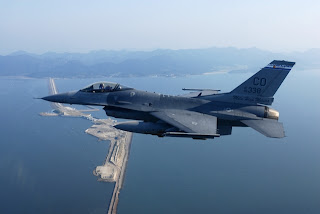
Formerly known as the Army Air Corps, the United States Air Force is charged with the defense and safety of American airspace, both at home and abroad. Having transitioned from the days of biplanes, flying aces like Eddie Rickenbacher and the Flying Circus to today’s highly trained pilots flying stealth bombers and F-15, F-16, F-22 fighters and Raptor pilots, the United States Air Force has grown in both technology and training since its humble beginnings.
The United States Air Force has engaged in multiple humanitarian operations, including the infamous Berlin airlift in the late 1940s and continues to provide support to ongoing and technological advanced global missions and operations today.
Personnel entering the United States Air Force may be trained and designated for Air Force jobs and on-ground support on aircraft such as bombers, air to ground attack fighters, helicopters, tankers, and reconnaissance craft.
Air Force personnel are also trained in a multitude of weapons and defense tactics including assault rifles, submachine guns, antitank, counter snipers, and special-purpose ops.
The National Security Act of 1947 defines the mission of the United States Air Force to “… be organized, trained, and equipped primarily for prompt and sustained offensive and defensive air operations. The Air Force shall be responsible for the preparation of the air forces necessary for the effective prosecution of war except as otherwise assigned and, in accordance with integrated joint mobilization plans, for the expansion of the peacetime components of the Air Force to meet the needs of war.”
Today, the United States Air Force, the most powerful aerial warfare branch of the armed forces, is the most technologically advanced military unit in the world.
Careers in the Air Force offer job opportunities in a multitude of fields are also available for non-pilot support positions, including:
• Computer specialties • Mechanics • Medical specialties • Security forces • Search and rescue specialties • Civil engineering • Combat rescue • Explosive ordnance disposal
Membership in the US Air Force offers a multitude of benefits that include but are not limited to:
• Scholarships for education • 100% of college tuition, with few limitations • Vocational training • Medical and dental benefits • Base facility and commissary services • Incentive pay • Retirement benefits
Take advantage of opportunities for a multitude of careers in the Air Force. Strive for perfection. Challenge yourself. Push the limits of your potential.
Learn about the multitude of programs available for:
• US Air Force Reserves • US Air Force Active Duty • Air National Guard • US Air Force ROTC Programs
If you’re looking for an exciting career that offers a wealth of opportunities and benefits, not to mention excitement, the US Air Force has something for you!
Today, the Air Force is made up of active duty forces, Air Force Reserve and Air National Guard units under the command of the United States Air Force Headquarters at the Pentagon in Arlington, Virginia.
The United States Air Force has seen conflict and battle in the First and Second World Wars, the Cold War, the Korean and Vietnam conflicts, as well as the invasion of Panama, the Gulf War, Operation Enduring Freedom and Operation Iraqi Freedom.
The U.S. Air Force carries itself with pride and dignity; a history that officially began in 1947 – one that has brought with it a legacy of valor, dedication and loyalty that continues into the 21st Century.
Formerly known as the Army Air Corps, the United States Air Force is charged with the defense and safety of American airspace, both at home and abroad. Having transitioned from the days of biplanes, flying aces like Eddie Rickenbacher and the Flying Circus to today’s highly trained pilots flying stealth bombers and F-15, F-16, F-22 fighters and Raptor pilots, the United States Air Force has grown in both technology and training since its humble beginnings.
The United States Air Force has engaged in multiple humanitarian operations, including the infamous Berlin airlift in the late 1940s and continues to provide support to ongoing and technological advanced global missions and operations today.
Personnel entering the United States Air Force may be trained and designated for Air Force jobs and on-ground support on aircraft such as bombers, air to ground attack fighters, helicopters, tankers, and reconnaissance craft.
Air Force personnel are also trained in a multitude of weapons and defense tactics including assault rifles, submachine guns, antitank, counter snipers, and special-purpose ops.
The National Security Act of 1947 defines the mission of the United States Air Force to “… be organized, trained, and equipped primarily for prompt and sustained offensive and defensive air operations. The Air Force shall be responsible for the preparation of the air forces necessary for the effective prosecution of war except as otherwise assigned and, in accordance with integrated joint mobilization plans, for the expansion of the peacetime components of the Air Force to meet the needs of war.”
Today, the United States Air Force, the most powerful aerial warfare branch of the armed forces, is the most technologically advanced military unit in the world.
Careers in the Air Force offer job opportunities in a multitude of fields are also available for non-pilot support positions, including:
• Computer specialties • Mechanics • Medical specialties • Security forces • Search and rescue specialties • Civil engineering • Combat rescue • Explosive ordnance disposal
Membership in the US Air Force offers a multitude of benefits that include but are not limited to:
• Scholarships for education • 100% of college tuition, with few limitations • Vocational training • Medical and dental benefits • Base facility and commissary services • Incentive pay • Retirement benefits
Take advantage of opportunities for a multitude of careers in the Air Force. Strive for perfection. Challenge yourself. Push the limits of your potential.
Learn about the multitude of programs available for:
• US Air Force Reserves • US Air Force Active Duty • Air National Guard • US Air Force ROTC Programs
If you’re looking for an exciting career that offers a wealth of opportunities and benefits, not to mention excitement, the US Air Force has something for you!
2012年8月23日星期四
Vidhwansak Anti Material Rifle and Tungsten Alloy Military
Vidhwansak (Sanskrit:"The Destroyer") is an Indian multi-caliber anti-materiel rifle (AMR) or large-caliber sniper rifle manufactured by Ordnance Factory,
Tiruchirapalli. It can be used in the anti-materiel role for destroying
enemy bunkers, lightly armoured vehicles, radar systems, communication
equipment, parked aircraft, fuel storage facilities, etc. It is also
effective in long range sniping, counter sniping and ordnance disposal
(shooting explosive ordnance from a safe distance) roles.
Denel was earlier contracted to supply various weapon systems for the
Indian Armed Forces, including Anti-materiel rifles and Self-propelled
howitzers. However, following allegations that it had paid kickbacks to
secure a deal for anti-material rifles, Denel was black-listed by the
government.
Then, Ordnance Factory Tiruchirapalli (OFT), in association with the Defence Research and Development Organisation (DRDO), began developing an indigenous version of the Denel NTW-20 AMR to fill the need. The development of Vidhwansak was completed in November 2005. After all-terrain and all-weather trials, the user trials began in March 2006.
Production began in February 2007. After trials, the Border Security
Force order 100 Vidhwansaks for use in the border areas. These were
supplied by October 2008. The rifle has also been offered to the Indian
Army and the National Security Guards.
Some reports suggest that the Vidhwansak is a reverse-engineered version of the NTW-20, of which Denel had supplied some units for trials. In any case, the Vidhwansak is comparable to the NTW-20 in terms of caliber, size and performance. The Vidhwansak,
which costs Rs 10 lakh (USD 20,000) is much cheaper than comparable
foreign alternatives such as the Denel NTW-20 AMR, which costs Rs 23
lakhs (USD 45,000). It also supports multiple calibers and fires 12.7mm, 14.5mm and 20mm rounds compared to dual calibers supported by the NTW-20.
Features
Vidhwansak is a manually operated, rotating bolt
action rifle. The barrel along with the receiver recoil inside the
chassis frame against a damping system. The rifle is fed from a
detachable box magazine, that is inserted from the left side. The rifle
can be quickly disassembled and carried in two man-portable packs, each
weighting about 12 - 15 kg.
The rifle has an effective range of 1800 m (1300 m for the 20 mm
version), while shots can be achieved even up to 2000 m. The rifle is
magazine fed, and reloaded through manual bolt action.
A muzzle brake is fitted on the end of the barrel which absorbs an
estimated 50%-60% of recoil. This is further supplemented by a buffered
slide in the receiver.
Vidhwansak is equipped with an 8X magnification, long eye relief telescopic sight with Parallax adjustment.
2012年8月19日星期日
Tungsten Alloy Military and DRDO Akash Surface to Air Missile System
The Akash Weapon System architecture is based on a
Group Headquarters and a number of batteries. The system is customized
on tracked or wheeled chassis to provide area air defense against
multifarious air treats to mobile, semi-mobile and static vulnerable
forces and areas. The Akash air defence group sanitizes
a large volume of air space over the combat zone. The system can be
operated either in the autonomous mode or in the Group Mode. The Akash Group consists of surveillance radars, Control Centres, phased array
tracking and missile guidance radars, launchers and ground support
equipment.
Surveillance Sensor (3 D CAR) is capable of detecting
and tracking aerial targets upto a range of 150kms and altitude of 18
kms. It provides coordinates in three dimensions of upto 200 targets to
the Group Control Centre (GCC) through secure communication links. The
data is used to cue the weapon control radar.
Control Centers at the group (GCC) and the battery (BCC) have ruggedised computers where real time air picture from various sensors is integrated and data is processed. Decision support software carries out threat
analysis and generates options for commanders. Automated target assignment and launch commands are generated for optional engagement in kill Zone.
C 4 I software specially designed to meet Indian defence requirements, provides fusion of air pictures from various sensors, automatic tracking of air targets, designation of track numbers to different targets, identification of friend or foe, automatic assignment of target to GW batteries, automatic selection of launcher and decision support system for commander for launch and control of missiles. This feature also drastically reduces the requirement of manpower for operation of the system as the complete operations from target detection to engagement are hands free. The advanced battle management software has been extensively field tested under realistic combat development conditions using multiple live targets. The system can also be integrated with legacy or futuristic radars and networks.
Control Centers at the group (GCC) and the battery (BCC) have ruggedised computers where real time air picture from various sensors is integrated and data is processed. Decision support software carries out threat
analysis and generates options for commanders. Automated target assignment and launch commands are generated for optional engagement in kill Zone.
C 4 I software specially designed to meet Indian defence requirements, provides fusion of air pictures from various sensors, automatic tracking of air targets, designation of track numbers to different targets, identification of friend or foe, automatic assignment of target to GW batteries, automatic selection of launcher and decision support system for commander for launch and control of missiles. This feature also drastically reduces the requirement of manpower for operation of the system as the complete operations from target detection to engagement are hands free. The advanced battle management software has been extensively field tested under realistic combat development conditions using multiple live targets. The system can also be integrated with legacy or futuristic radars and networks.
Multifunction phased
array radar variants have been configured on BMP and T-72 based tracked
vehicle. The tracking and missile guidance radar configuration consists
of a slewable phased array antenna of more than 4000 elements,
spectrally pure TWT transmitter, two stage superhetrodyne correlation
receiver for three channels, high speed digital signal processor, real
time management computer and a powerful radar data processor. The system
has multiple target handling capability from any direction. Each radar
can simultaneously engage four targets and guide eight missiles in
ripple mode. The radar has advanced ECCM features.
Akash launcher carries three ready to fire Akash missiles. It is interfaced with BCC via line or radio, is fully automatic and remotely controllable, has a microprocessor controlled electromechanical servo system and is capable of checkout and auto launch of the missiles. It has its own built in GTE power source and can also be operated by DC power from housed DC batteries.
The surveillance radar, launcher and control centre have been configured on T-72 and low bed trailer (Wheeled) chassis. Significant customization to user requirements has been incorporated. Akash surface-to-air missile has a launch weight of 720kg, diameter 350mm and a length of 5.8m. Its integral Ram Rocket propulsion provides all the way thrusting to a range of 25-30 km with a velocity of 600-700m/s from 1.5 km onwards. The Ram jet system enables powered intercept, high maneuverability, much higher terminal velocities, high average speed, lesser reaction time, lower flight time and better engagements of receeder targets vis-à-vis boost coast type of missiles. It also has wider no escape zones. The digital autopilot and guidance system are microprocessor based.
Akash launcher carries three ready to fire Akash missiles. It is interfaced with BCC via line or radio, is fully automatic and remotely controllable, has a microprocessor controlled electromechanical servo system and is capable of checkout and auto launch of the missiles. It has its own built in GTE power source and can also be operated by DC power from housed DC batteries.
The surveillance radar, launcher and control centre have been configured on T-72 and low bed trailer (Wheeled) chassis. Significant customization to user requirements has been incorporated. Akash surface-to-air missile has a launch weight of 720kg, diameter 350mm and a length of 5.8m. Its integral Ram Rocket propulsion provides all the way thrusting to a range of 25-30 km with a velocity of 600-700m/s from 1.5 km onwards. The Ram jet system enables powered intercept, high maneuverability, much higher terminal velocities, high average speed, lesser reaction time, lower flight time and better engagements of receeder targets vis-à-vis boost coast type of missiles. It also has wider no escape zones. The digital autopilot and guidance system are microprocessor based.
The missile has all the way command
guidance for full range of operation. The missile uses state-of-art
integral ram jet rocket propulsion system and the onboard digital
autopilot ensures syability and cintrol. Electro-pneumatic servo
actuation system controls cruciform wings for quick response, and
thermal batteries provide onboard power supply. The Radio Proximity Fuse
has advanced signal processing features. Together with the
prefragmented warhead and safety arming mechanism, a high kill
probability of maneuvering targets flying upto 600m/s is achieved. The
missile has number of safety and abort features ensuring its safe
handling and operations. The missiles do not require any maintenance in
the field as it is fully integrated in the factory.
Akash Ground Support system is designed for high reliability and
maintainability. The system has built in diagnostics and checkout
systems with card level fault diagnostics and field replacement. The
system has built in simulator for operators training.
订阅:
博文 (Atom)