2012年7月16日星期一

Gepard Anti Material Rifle and Tungsten Alloy Military

The Gepárd anti-materiel rifles are a family of Hungarian weapons designed to destroy unarmored and lightly armored targets. These long range, large caliber rifles have high accuracy as well as high muzzle velocity. The Gepárds originate from World War I anti-tank rifles created to damage the primitive armored vehicles developed by the British. Since then, anti-materiel rifles fell into disuse. Heavier tanks meant thicker armor, which even the heaviest rifles could not pierce. However, in 1987 the Hungarian army sought to obtain a compact, mobile weapon that could damage lightly armored targets. The project, led by eng. ltc. col. Ferenc Földi (Institute of Military Technology of the Hungarian People's Army), culminated in the creation of the Gepárds.
The M1 was the first Gepárd rifle to enter service. It featured a long barrel for increased accuracy, a skeleton stock to reduce weight, and used the heavy 12.7 x 108 mm Soviet cartridge. However, the rifle was complicated to reload. The M1 fired only one shot and would then have to be manually reloaded. To do this, the user had to rotate, pull back, remove the grip assembly (whose shape resembles a signal-flare handgun), and insert another cartridge. This tedious task took time 
to master and slowed the weapon's rate of fire. Other difficulties such as high recoil also plagued the M1. The recoil problem was solved with the addition of a barrel that recoiled back after each shot. The design was inspired by artillery cannons, which face the same impediment. Still, the Gepárd rifles need specially made, high-strength telescopic gunsights. Improvements, such as the addition of a carrier/lafette backpack and a longer barrel, led to the M1A1 variant, but at 21 kilograms its combat weight was deemed excessive.
The M1 was essentially a sniper weapon, not primarily intended for military field application, but for anti-terrorist police and special forces' use, who operate on the "one shot, one hit" principle. The single shot action was designed to reduce the number of moving parts and allow for extreme precision, five hits out of five shots fit in a 25 centimeter radius circle at 1300 meters. Yet, the Hungarian army decided to purchase 25 rifles of the Gepárd M1 type for use as an
in-the-field materiel destruction rifle, but did not purchase any of the later variants so far. Owing to the great weight of Gepárd M1, sharpshooters were instructed to abandon the entire weapon if forced to retreat quickly and only save the grip assembly for proof, rendering the gun useless.

2012年7月15日星期日

Tungsten alloy military agni-1 missile launched successfully from Wheelers Island, says the MoD Official press release placed below

India’s 700 km range ballistic missile, ‘AGNI I’ was successfully launched today from the wheeler island off the coast of Odisha. It was a textbook launch meeting all mission objectives and the missile reached the target point in the Bay of Bengal following the prescribed trajectory.  The missile was launched from Road Mobile Launcher System and was tracked by Radar and Telemetry stations located along the coastline. Two Naval Ships located near the target point tracked the missile in the terminal phase of the Flight.
Indigenously developed by DRDO the missile is already in the arsenal of Indian Armed Forces and was launched by the Strategic Forces Command as part of training exercise to ensure preparedness.
After robust sea, air and underwater combat arms, the Navy now wants a dedicated force for the virtual front as well. The force has begun the process to recruit information technology (IT) engineers and graduates as short-service commissioned officers.
The Navy's drive to induct IT officers, as part of its main executive branch, comes in the backdrop of cyber warfare emerging as a potentially crippling form of waging covert wars as well as Chinese and Pakistani online espionage agents continuing with their incessant attempts to hack into Indian computer networks.
"All combat operations are now becoming network-driven. The aim is to create a specialist cadre of creators, custodians and administrators of our various networks on warships as well as ashore installations," said a senior officer.
Towards this end, applications have been invited from B Tech and M Tech (computer sciences), BSc and MSc (IT/computer science), and BCA and MCA graduates for a course beginning in the Indian Naval Academy at Ezhimala in Kerala from December.

2012年7月13日星期五

Tungsten Alloy Military Brahmos Supersonic Cruise missile

Tungsten Alloy Military Brahmos Supersonic Cruise missile
BrahMos is a supersonic cruise missile that can be launched from submarines, ships, aircraft or land. It is a joint venture between India's Defence Research and Development Organisation (DRDO) and Russia's NPO Mashinostroeyenia who have together formed the BrahMos Aerospace Private Limited. 
The acronym BrahMos is perceived as the confluence of the two nations represented by two rivers, the Brahmaputra of India and the Moskva of Russia. It travels at speeds of Mach 2.5 to 2.8 and is the world's fastest cruise missile. It is about three-and-a-half times faster than the U.S.A's subsonic Harpoon cruise missile. A hypersonic version of the missile is also presently under development (Lab Tested with 5.26 Mach Speed). Though India had wanted the BrahMos to be based on a mid range cruise missile, namely P-700 Granit, instead Russia opted for the shorter range sister of the missile, P-800 Oniks, in order to comply with MTCR restrictions, to which Russia is a signatory. Its propulsion is based on the Russian missile, and guidance has been developed by BrahMos Corp.

The BrahMos has been developed as a joint venture between the Defence Research and Development Organization (DRDO) of India and the Federal State Unitary Enterprise NPO Mashinostroyenia (NPOM) of Russia under BrahMos Aerospace. The missile is named after two rivers, the Brahmaputra and the Moskva.
Since late 2004, the missile has undergone several tests from variety of platforms including a land based test from Pokhran desert, in which the 'S' maneuver at Mach 2.8 was demonstrated for the Indian Army and a launch in which the land attack capability from sea was demonstrated.
BrahMos claims to have the capability of attacking surface targets as low as 10 meters in altitude. It can gain a speed of Mach 2.8, and has a maximum range of 290 km. The ship-launched and land-based missiles can carry a 200 kg warhead, whereas the aircraft-launched variant (BrahMos A) can carry a 300 kg warhead. It has a two-stage propulsion system, with a solid-propellant rocket for initial acceleration and a liquid-fueled ramjet responsible for sustained supersonic cruise. Air-breathing ramjet propulsion is much more fuel-efficient than rocket propulsion, giving the BrahMos a longer range than a pure rocket-powered missile would achieve.This is because thea ramjet propulsion does away with the need to carry the oxidiser thus greatly reducing the weight of the missile.
The high speed of the BrahMos likely gives it better target-penetration characteristics than lighter subsonic cruise-missiles such as the Tomahawk. Being twice as heavy and almost four times faster than the Tomahawk, the BrahMos has almost 32 times the initial kinetic energy of a Tomahawk missile (although it pays for this by having only 3/5 the payload and a fraction of the range despite weighing twice as much, suggesting a different tactical paradigm to achieve the objective).
Although BrahMos is primarily an anti-ship missile, it can also engage land based targets. It can be launched either in a vertical or inclined position and is capable of covering targets over a 360 degree horizon. The BrahMos missile has an identical configuration for land, sea, and sub-sea platforms. The air-launched version has a smaller booster and additional tail fins for added stability during launch. The BrahMos is currently being configured for aerial deployment with the sukhoi-su-30mki as its carrier.

Tungsten alloy military Towed Artillery Howitzer

In the 1960s Sweden started to look for a replacement for the French Haubits F (Obusier de 155 mm Modèle 50). The American M109 howitzer was offered and tested. Though the price was low the Swedish Arms Administration found the high maintenance costs, the low rate of fire and the not so good mobility of the M109 made it worth the effort to develop a domestic howitzer.

The requirements for a new gun would be:
The result was a compromise between a more expensive Self propelled howitzer and a less mobile conventional towed howitzer.

The FH77 was the first field howitzer featuring an APU to make it self-propelled for tactical movement.
The rate of fire was, at the time, exceptionally high for a 155 mm howitzer. The FH77 could fire 3 rounds in 8 seconds, or 6 rounds in 25 seconds. In a sustained firing role it could fire 6 rounds every second minute for 20 minutes.
FH77B
Though the haub 77 was a formidable gun it seemed impossible to export. There were two reason for this:
The maximum elevation was limited to 50°.
It did not use NATO ammunition.
Therefore Bofors developed a new version - the FH 77B. The main difference was that the B-model used a servo operated interrupted screw breech, instead of the sliding block action on the FH 77. The maximum elevation had been increased from 50° to 70°. The barrel is slightly longer, 39 calibres, and uses a single baffle muzzle brake as opposed to the pepper-pot style muzzle brake on the 77. The engine was a Mercedes diesel. Since the B-version used bagged charges it was somewhat slower than the original model - 3 rounds in 10 seconds compared to 3 rounds in less than 8 seconds. The maximum range, on the other hand, was increased to 24km and using base-bleed extended to 28km.
Nigeria bought 48 pieces in 1980 and in March 1986 India ordered 410 of the Bofors FH 77B. The Indian also got a contract option for additionally 1,100 howitzers.
Soon after the $1.4 billion contract with India had been signed two Swedish left-wing journalists reviled that Bofors had paid kickbacks to Indian public servants. As a result of this India declined to exercise their option on the second batch. A decision India has had all reasons to regret, as the FH 77B proved it self to be accurate, reliable and durable.
Bofors, who had been self-assured enough to start the production of the second batch, found them self with some 50 howitzers but no buyer. The Swedish government stepped in and forced the Army to purchase 51 of the B-model.

2012年7月10日星期二

DRDO Akash Surface to Air Missile System

AKASH, developed as a part of Integrated Guided Missile Development Programme (IGMDP) initiated by India in 1983, is an all weather medium range surface to air missile system having a multi- directional, multi target area defence capability. The weapon can simultaneously engage several air targets in a fully autonomous mode of operations.
Defence Research and Development Organisation (DRDO) has fully realized and integrated Mark-I Version of Akash Weapon system. DRDL, Hyderabad has been responsible for system integration and missile development, LRDE Banglaore for radar development , R&DE Pune for launcher,CVRDE for Tracked Vehicles, ARDE for Warhead, and HEMRL for Propellants. Extensive tests of the Weapon system have proved the consistency of various sub systems of the flight and ground elements thereby confirming accuracy, robustness and reliability.
The flight and ground elements of the weapon system are integrated in a plug and fight architecture. The hardware and software integration of various weapon system elements permits autonomous management of air defence functions such as programmable surveillance, target detection, target acquisition, tracking, identification, threat evaluation, prioritization, assignment and engagement. The weapon system can simultaneously engage multiple air targets in a fully
autonomous mode of operation.Command and control nodes, communication links, self propelled launchers and sensors are integrated to achieve these functionalities. The system is designed to enable integration with other air defence command and control networks through secure communication links. The system is also provided with advanced ECCM Features at various levels. The weapon system is cost effective relative to equivalent systems in the market. The weapon system has cross – country mobility and has air, road and rail deployability.
 
The first trial firings occurred in 1990, with the 10th test in September 1998. As of August 2006, the Akash system has been tested 16 times since January 2005, including two crossing targets taken with live warheads. Akash has multiple-targeting handling capacity, with digitally coded command guidance. Demonstration of simultaneous target intercept capability against two live aerial targets was successfully conducted in Nov 2005.
The Akash Weapon System architecture is based on a Group Headquarters and a number of batteries. The system is customized on tracked or wheeled chassis to provide area air defense against multifarious air treats to mobile, semi-mobile and static vulnerable forces and areas. The Akash air defence group sanitizes a large volume of air space over the combat zone. The system can be operated either in the autonomous mode or in the Group Mode. The Akash Group consists of surveillance radars, Control Centres, phased array tracking and missile guidance radars, launchers and ground support equipment.
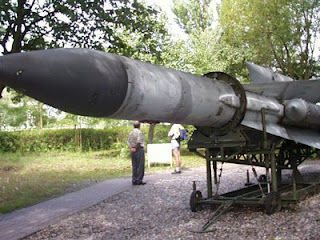
Surveillance Sensor (3 D CAR) is capable of detecting and tracking aerial targets upto a range of 150kms and altitude of 18 kms. It provides coordinates in three dimensions of upto 200 targets to the Group Control Centre (GCC) through secure communication links. The data is used to cue the weapon control radar.
 

2012年7月9日星期一

Surface to Air Missile System Operational history

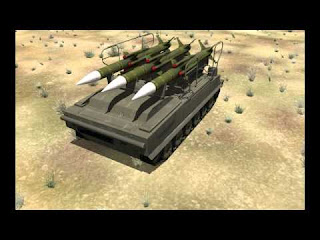
The 2K12 surprised the Israelis in the 1973 Yom Kippur War. They were used to having air superiority over the battlefield. The highly mobile 2K12 took a heavy toll on the slower A-4 Skyhawk and even the F-4 Phantom, forming a protective umbrella until they could be removed. The radar warning receivers on the Israeli aircraft did not alert the pilot to the fact that he was being illuminated by the radar. Once the RWRs were reprogrammed and tactics changed, the 2K12 was no longer such a grave threat. Pilots dubbed the 2K12 "Three Fingers of Death", in reference to the launcher's appearance.
The superior low altitude performance of the weapon, and its new CW semi-active missile seeker resulted in a much higher success rate compared to the earlier SA-2 and SA-3 systems. While exact losses continue to be disputed, around 40 aircraft are usually cited as lost to SAM shots, and the 2K12 / SA-6 proved most effective of the three weapons.
On 19 April 1974 a MiG-23MS flown by Maj. El al-Masry is said to have shot down 2 IAF F-4Es during a mission over the Golan Heights against an Israeli offensive to destroy Syrian SAMs. He was subsequently shot down by an AAM fired by the Israelis and apparently by a friendly SA-6 battery.
The Syrians also deployed it during the conflict in Lebanon in mid-1982 against the IAF, but this responded early to the SAM threat in the Beqaa Valley by launching Operation Mole Cricket 19 in which several SA-6, along with SA-2s and SA-3s were destroyed in a single day.

The system was deployed by Libya during the border dispute with Chad and proved a threat for French aircraft, however on January 7, 1987 these were successful in destroying an SA-6 radar site in the Faya Largeau area with SEPECAT Jaguars armed with Martel anti-radiation missiles.
In March, the Chadian rebels captured Ouadi Doum air base and captured practically the whole heavy equipment used for the defense of this airfield intact. Most of this equipment was transported to France and the USA in the following days, but some SA-6s remained in Chad.
With this catastrophe, the Libyan occupation of the northern Chad – and the annexation of the Aouzou Strip – was over: by 30 March, also the bases at Faya Largeau and Aouzou had to be abandoned. The LARAF now has got a completely different task: its Tu-22Bs were to attack the abandoned bases and destroy as much equipment left there as possible. First such strikes were flown in April, and they continued until the 8 August 1987, when two Tu-22Bs which tried to strike Aouzou, were ambushed by a captured SA-6 battery used by the Chadian Army, and one of the bombers shot down.
A USAF F-16 (serial 87-228) was shot down on January 19, 1991 by an SA-6. It was combat loss number 10 in Operation Desert Storm. The pilot, Captain Harry 'Mike' Roberts, ejected safely, but was taken prisoner. The aircraft was on a mission to attack the Air Defense Headquarters Building in Baghdad. It had flown 4 combat missions before being lost.. Two days before, a B-52G was damaged by a SAM which could have been an SA-6 or an SA-3.
In any case, the SA-6 threat was largely controlled by Allied EW assets, but the older SA-2 and SA-3 missile systems shot down several allied aircraft.

ZRK SD Kub/Kvadrat [SA-6] Surface to Air Missile System

The 2K12 "Kub" (Russian: 2К12 "Куб"; English: cube) mobile surface-to-air missile system is a Soviet low to medium-level air defence system designed to protect ground forces from air attack. "2К12" is the GRAU designation of the system. Kub is known in the west by its NATO reporting name "Gainful" as well as the US Department of Defense designation SA-6.

Each 2K12 battery consists of a number of similar tracked vehicles, one of which carries the 1S91 (SURN vehicle, NATO designation "Straight Flush") 25 kW G/H band radar (range 75 km/47 miles) equipped with a continuous wave illuminator, in addition to an optical sight. The battery usually also includes 4 triple-missile transporter erector launchers (TELs) and 4 trucks each carrying 3 spare missiles and a crane. TEL is based on a GM-578 chassis, while the 1S91 radar vehicle on a GM-568, all developed and produced by MMZ.

The development of the 2K12 "Kub" was started after 18 July 1958 at the request of the CPSU Central Committee. The system was set the requirements of being able to engage aerial targets flying at speeds of 420–600 m/s at altitudes of 100 m to 7 km at ranges up to 20 km, with a single shot kill probability of at least 0.7.
The systems design was the responsibility of the now Tikhomirov Scientific Research Institute of Instrument Design (NIIP). In addition to NIIP several other design bureaus were involved in the creation of the Kub missile system including the now JSC Metrowagonmash (former MMZ)which designed and produced the chassis of the self-propelled components. Many of the design bureaus would later go on to 
co-operate in the development of the successor to the 2K12 "Kub", the 9K37 "Buk"
Kub downed its first ever air target on February 18, 1963 during the state trials at Donguz (Russian: Донгуз) artillery testing range, Orenburg Oblast. It was an Ilyushin Il-28 bomber.
 
The system entered an extended testing period between 1959 and 1966, after overcoming the technical difficulties of producing the 2K12 "Kub" the system was accepted into service on the 23rd January, 1967 and went into production that same year.

It is sometimes claimed that the M-11 Shtorm (SA-N-3) naval system is a version of the 3M9 but this is not the case, as the M-11 Shtorm is a separate system and, unusually for Russian surface-to-air missiles, has no land-based variant.


2012年7月5日星期四

Tungsten alloy Arjun Main Battle Tank (MBT)

the arjun mk2 will be a 60+ton tank and is most likely going to feature wedge shaped armour on the frontal portion like the leopard2a6. i found a very old article regarding the arjun mk2 from the net.it probably appeared first on force magazine though i am not sure.
 
arjun Mk2 MBT's pre-production prototype to rollout by mid-2009
Unfazed and undeterred by the quality-control problems that have beset the series-production phase of the Arjun Mk1 main battle
tank (MBT) at the assembly line of the ministry of defence-owned Heavy Vehicles Factory in Avadi, the DRDO's [Defence Research and Development Organisation] Avadi-based Combat Vehicles Research & Development Establishment [CVRDE] has embarked upon the development of the third-generation Arjun Mk2 MBT, whose first pre-production prototype is due for rollout by mid-2009, as per present estimates. As per the Army HQ's General Staff Qualitative Requirements (GSQR), this MBT -- to be manned by a three-man crew complement will have a redesigned rear hull section and turret, an enhanced powerpack, a turret-mounted autoloader coupled to a 
redesigned turret bustle, an improved 120mm rifled-bore main gun controlled by a new hunter-killer digital fire-control system (DFCS), and a novel environment control system being co-developed with Israel's Kinetics Ltd that will provide NBC [nuclear biological chemical] air filtration/over-pressure generation, as well as cooling for the vectronics (all built by the MoD[Ministry of Defence]-owned Bharat Electronics Ltd [BEL]) and crew compartment. The redesign of the Arjun Mk2's hull and turret sections, and R&D [research and development] work on the autoloader is being undertaken with the help of France's Nexter Systems.

The main gun, which currently has a barrel length of 44 calibres, will be increased to 52 calibres by the
DRDO's Pune-based Armaments R&D Establishment. The gyro-stabilised gun will be insulated with a thermal sleeve and will incorporate a muzzle reference system, as well as an automatic compressed air fume extraction system instead of the Arjun Mk1's existing fume extraction cylinder. The turret, to have a rotation time of nine seconds through 360 degrees, is being redesigned around the ammunition autoloader, which will hold 22 rounds of up to five types of ready-to-fire rounds and will permit a rate of fire of 12 shots per minute. Another 20 rounds and their modular charges will be housed within a pressurised turret bustle whose
temperature will be cryogenically controlled. The main gun, to have a combat range of 5.5km when firing FSAPDS kinetic-energy rounds, will have maximum elevation/depression angles of +20 degrees and -9 degrees. The Arjun Mk2 will share with its predecessor the same imported all-electric power traverse system (supplied by Germany's ESW Extel Systems Wedel), which comprises the automatic elevating and traversing drives with semi-automatic back-up, direct gun-laying with electrical instruments control and manual control. The DFCS will include an independent commander's panoramic sight incorporating a medium-range uncooled thermal imager, and the Sagem Défense Sécurité-built IRIS thermal camera of the gunner's sight that can 'see' at around 5.5km, recognise a target at 3.1km and identify targets at 2.5km. The gunner's sight will incorporate an 'auto tracker' -- an optronic system based on image processing that will simultaneously track up to six moving targets. As the gunner's sight is fixed on a target, a picture analysis will take place. When the target moves, the 120mm gun and the gunner's sight will get aligned with the target and will move automatically while keeping the target in focus. This is particularly good in cross-country terrain when the target is moving and the MBT might go through bumps or twists or turns for manoeuvring, but the 'auto tracker' will not lose sight of the target. Presently, the Arjun Mk1 uses a 'director mode' for track initiation. On the Arjun Mk2, the top mirror of the gunner's sight will be independently stabilised, and a digital ballistics computer will evaluate the elevation of both the top mirror and the main gun, as well as the angle of the turret. There will be a continuous feeding of these parameters into the ballistics computer, which in turn will give electronic instructions to the all-electric gun-control system. Hence, the crosshairs of the gunner's sight will be right in the middle of the target even in a cross-country environment. If, momentarily the gun is misaligned, the firing circuit will remain closed and the gunner will not be able to fire. The DFCS will receive all required meteorological data from IRDAM SA of Switzerland's Model 2156B sensor that will measure wind speed, wind direction, air temperature and atmospheric pressure. All-terrain navigational accuracy will be provided by a fibre optic gyro-based autonomous land navigation system (ALNS) that can store more than 100 routes and 500 waypoints. The communications element of the Arjun Mk2's vectronics suite will include a digital universal control harness duplex communications system for ensuring voice and data communications between the MBT commander, gunner and driver, and an AQ-6411 intercom system meant for inter-communications between crews of the host MBT and also with other MBT crews through the STARS V50WFF LVM-271 radio. Also using this radio will be a BEL-built battlespace management system (BMS), which will allow all friendly MBTs to share a common operating picture and give senior armoured corps commanders a comprehensive view of the battle space. It will also free up frontline MBT commanders from routine reporting tasks. The BMS will be capable of displaying relevant digital moving map data (in 2-D) and plotting of own position, will offer zooming, panning, fit-all, overlay and refresh modes, will plot the positions of friend or foe as well as mines, bunkers etc using different symbols, will generate path profiles, will send situation reports and receive operational order updates. The BMS will also be linked to the MBT's on-board health and usage monitoring system (HUMS), an achievement that will significantly reduce the MBT's operational logistics demands.

Tungsten Alloy Military of History

From 1965 to 1972, the US Army conducted a parallel development program for the 152mm XM578 cartridge, which was co-developed with the prototype MBT-70 Tank. The XM578 cartridge used a 

tungsten alloy that was slightly denser than the British alloy, consisting of 97.5 percent tungsten and 2.5 percent binder, which had a density of 18.5 gm/cc. In response to the new operational 
requirements, military developers evaluated a succession of metal alloys. Initially, the British government developed a higher density tungsten alloy consisting of 93 percent tungsten and 7 percent binder tungsten alloy (WA). The new WA alloy had a density of 17 gm/cc -- versus 13 gm/cc for tungsten carbide. 

Unfortunately, rising costs and technical problems caused the partners to go their separate ways. Trials began in 1968 and problems resulted in further delays and cost overruns. By 1969 the vehicle cost 5 times what was projected and as a result Germany backed out of the project. The MBT-70 program was finally halted in January 1970. The same fiscal year (1971-72) witnessed the termination of two major weapons procurement programs, one 
for the Cheyenne advanced attack helicopter and the other for the MBT-70 main battle tank. Although Army leaders saw both weapons systems as critical to the Army's long overdue modernization program, they were unable to convince the Department of Defense and Congress of a need for these weapons commensurate with their costs. The joint effort with the Federal Republic of Germany, under which the MBT-70 had been developed, was modified to a co-operative program in the middle of Fiscal Year 1970.

Tungsten Alloy Military MBT-70 Main Battle Tank NBC System Weapons Systems

During the 1960s the US Army continued to improve the M60 tank. However, unless a new tank was fielded there would be a large gap between US and Soviet tanks when the Soviets fielded their next generation MBT. The first try at the Supertank concept, the MBT 70 was a failure due to high costs. An early example of a codevelopment initiative is the MBT-70 [Main Battle Tank 1970s] program between West Germany and the United States. Thanks largely to the support of then Defense Secretary Robert McNamara, agreement was reached in 1963 between the two nations to jointly develop a main battle tank. With cast homogeneous steel layered armor, the inner shell was overlaid with spaced high hardness homogeneous rolled armor steel.

The US prototype was equipped with a 152mm gun launcher with an auto loader. It was capable of firing AP/HE/WP rounds and the Shillelagh Missile. The main armament was to be a long-barrelled improved XM-150 variant of the XM-81 gun/launcher mounted on the M551 Sheridan and the M60a2 Patton. This was a much more reliable weapon than the earlier variant, firing Sabot, HE, and Cannister rounds in addition to the Shilelagh A/T Missile, but the earlier weapon's reputation was such that it was a lost cause from the start. It had a coax 7.62 machinegun and a 20mm AA remote control gun in a separate part of the turret. It would pop up out of twin hatches and fire at the target. The German version had a 120mm autocannon, instead of the 152mm gun launcher.

In some respects, the tank was fairly conventional. It had a diesel engine, and the armor, whilst strong was not of the composite type on the Abrams. The silhoutte was low. The tank had a three-man crew, each in his own compartment. Probably the most intruiging aspect was that all the crewmen were located in the turret. The driver was in the turret, in a capsule that rotated to keep him orientated to the front of the vehicle [it is said that the driver would often get confused when the turret rotated anyway]. This had the effect of raising the sihouette a little, and if the contra-rotating mechanism was knocked out, it would effectively immobilize the tank. It was to include hydropneumatic suspension, stabilization system, and a NBC system. The hydropneumatic suspension allowed the vehicle to crouch or raise one end of the tank to better take advantage of hull-down positions. 

Problems, however, plagued the MBT-70 program from the beginning. Difficulties with English-German translations, metric to English measurement conversions, and differences between German and American manufacturing and designing practices caused considerable headaches before the first tanks were even designed. Most of the new systems were still experimental and this led to massive cost overruns and delays. Also the joint nature of the program led to disagreements about design features. 

2012年7月3日星期二

Tungsten copper alloy Military

There are many methods making tungsten copper alloy military.
Traditionally, tungsten copper alloy military making commonly adopt copper permeability and liquid sintering technique. However as tungsten and copper indissolve each other and the sintering sex also poorer, it is difficult to implement fully sintering to optimize dense and form the uniform microstructure, and also hard to flexible adjustment of composition of copper tungsten. The followings are the commonly.

Infiltration Method
Infiltration method is that firstly prepare fixed density and strength of porous tungsten substrate skeleton, than infiltrate low melting point mental copper into the tungsten skeleton.

The mechanism of infiltration method is when the liquid copper wetting tungsten porous substrate, under capillary pressure, the liquid copper flow long with the particle’s porous skeleton and padding the porous skeleton, resulting in comprehensive good materials.
The merits of tungsten copper alloy military made from this method are high density, good sintering performance, good thermal and electricity conductivity. However, this tungsten copper military alloy needs further machining, which increase the machining cost, reduce the yield. High temperature liquid sintering method
As there is a huge distance between the tungsten and copper of the melting point, so we can adopt high temperature liquid sintering method to make tungsten copper alloy military, through which densificate its density at the temperature higher than copper melting point.


This method’s advantage is that the processing is simple and easily control, while high sintering temperature, long sintering time and low sintering density which make the finished products can not meet the requirements of usage. In order to improve the density, repress, hot –press and hot forging after liquid sintering.
Arc melting method
Arc melting method is making into electrode with the copper tungsten, then melting in the arc furnace, so tiny grain, low density ,high densify and good corrosion resistance tungsten copper alloy military come out.

Tungsten Alloy for Military Defense

The Army uses of powder metallurgy (P/M) extend from the conventional press and sinter to the more exotic processes of liquid phase sintering of tungsten heavy alloys (WHA) and powder injection molding (PIM). The Navy has taken great advantage of WHA by employing them iii the phalanx close-in weapon system (CIWS). The Army intends that research will lead to an alloy or composite of tungsten that, when used as a long rod penetrator, will perform as well as, or better than, current depleted uranium (DU) penetrators. Tungsten Heavy Alloys (WHAs) are the best choice when Designers in defense industries, WHAs are the ideal material which combines high density, good mechanical strength and which is easily machined, tungsten alloy for mlilitary defense is very important.
Properties of tungsten heavy alloy
Tungsten heavy alloy have very high melting point and have a density twice that of steel and are more than 50% heavier than lead. Due to their high density, tungsten alloys offer greater radiation shielding than lead and are non-toxic. Tungsten alloys are electrically and thermal conductive and offer good corrosion resistance. They also have a low coefficient of expansion and have a high modulus of elasticity. Because of these unique properties tungsten alloys are used extensively in military applications, balance weights, rocket components, bullets, etc. The heavy-metal alloys are especially useful for aircraft counterbalances and as weights in gyratory compasses. Heavy-metal inserts are used as the cores of high-mass military projectiles. Tungsten alloys are widely used for military defense.

Tungsten heavy alloy is increasingly adopted in tungsten alloy defense as the raw material to make parts of military products, such as bullet, armor and shells, shrapnel head, grenade, hunting gun, bullet warheads, bulletproof vehicles, tank panzers, cannons, firearms, etc. A major use for tungsten heavy alloy is in kinetic energy penetrators, where they are in direct competition with depleted uranium (DU).